Strategy Guide
Final Fantasy X-2 is the sequel to Final Fantasy X, one of the most successful games in the Final Fantasy franchise. Released on March 13th, 2003, in Japan and November 18th, 2003, in North America, it may not have done as well as its predecessor, but it still sold over 5 million copies. Quite the amazing feat considering it was one of the first Final Fantasy games to have a sequel.
However, now that Final Fantasy X has been released in HD on the PlayStation 3 and PlayStation 4, Steam, Xbox One, Nintendo Switch, and recently, Nintendo Switch 2, it has nearly always been packaged with Final Fantasy X-2, giving players who didn’t purchase the standalone game an opportunity to continue their journeys through Spira with a second game set in the same world.
Review
Final Fantasy X-2 had early detractors and still has many players who aren’t interested in playing it. While it shares many ties with Final Fantasy X, a fan favorite in the series, it also differs from its predecessor in polarizing ways. Those polarizing elements show up in the first few minutes of turning on the game. They are:
- An all-female playable party
- A much more light-hearted, and at times literally musical, sing-songy story.
- A story that sometimes feels closely tied to Final Fantasy X, but doesn’t mesh as well as it could or should.
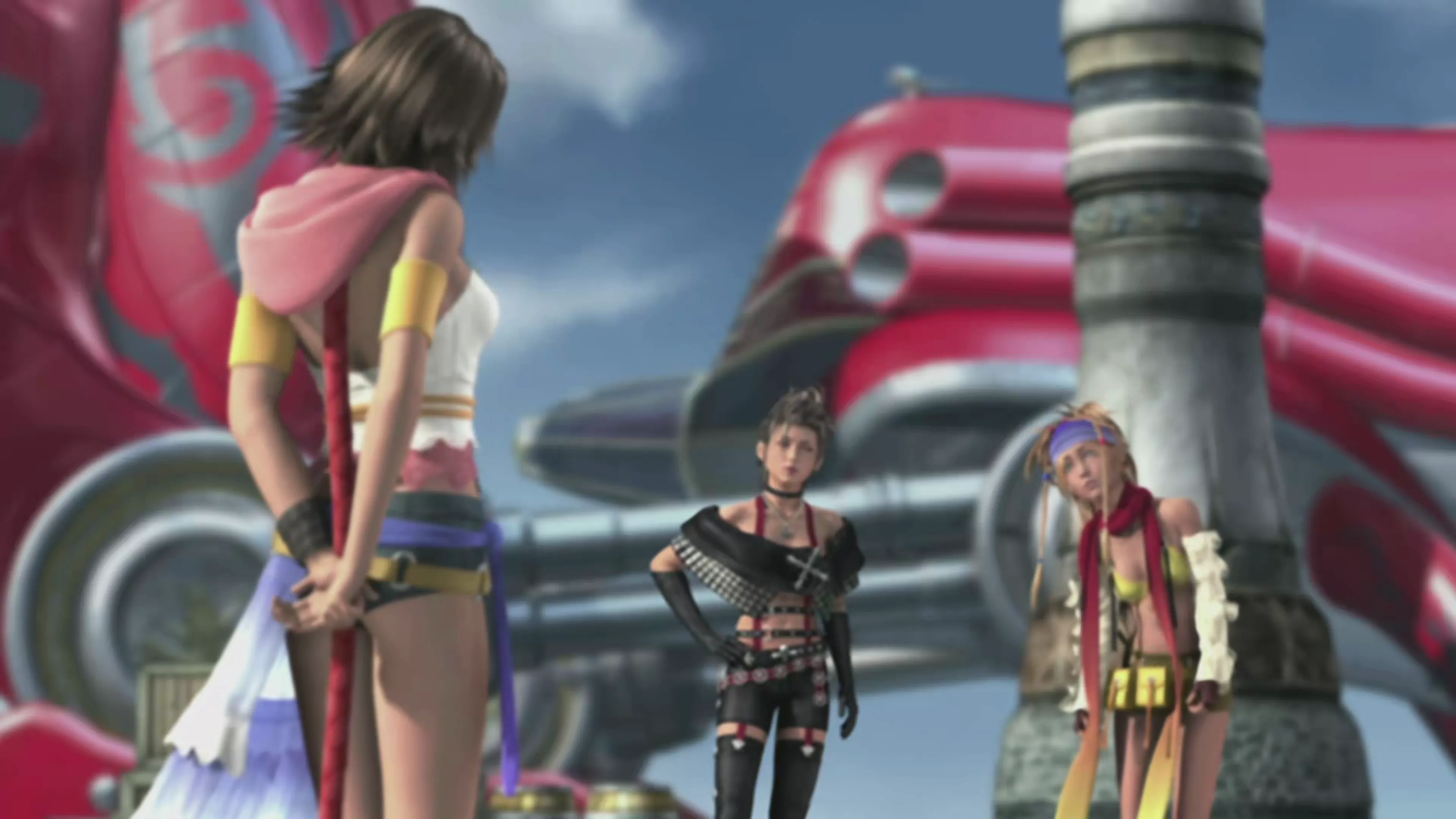
All three take center stage (again, literally) during the opening cinematic. Unfortunately, this can detract from players looking for a more serious Final Fantasy, or a role-playing game that doesn’t force you to play the three lead females. Gone are the days of choosing from a full cast of varied characters, as in Final Fantasy X.
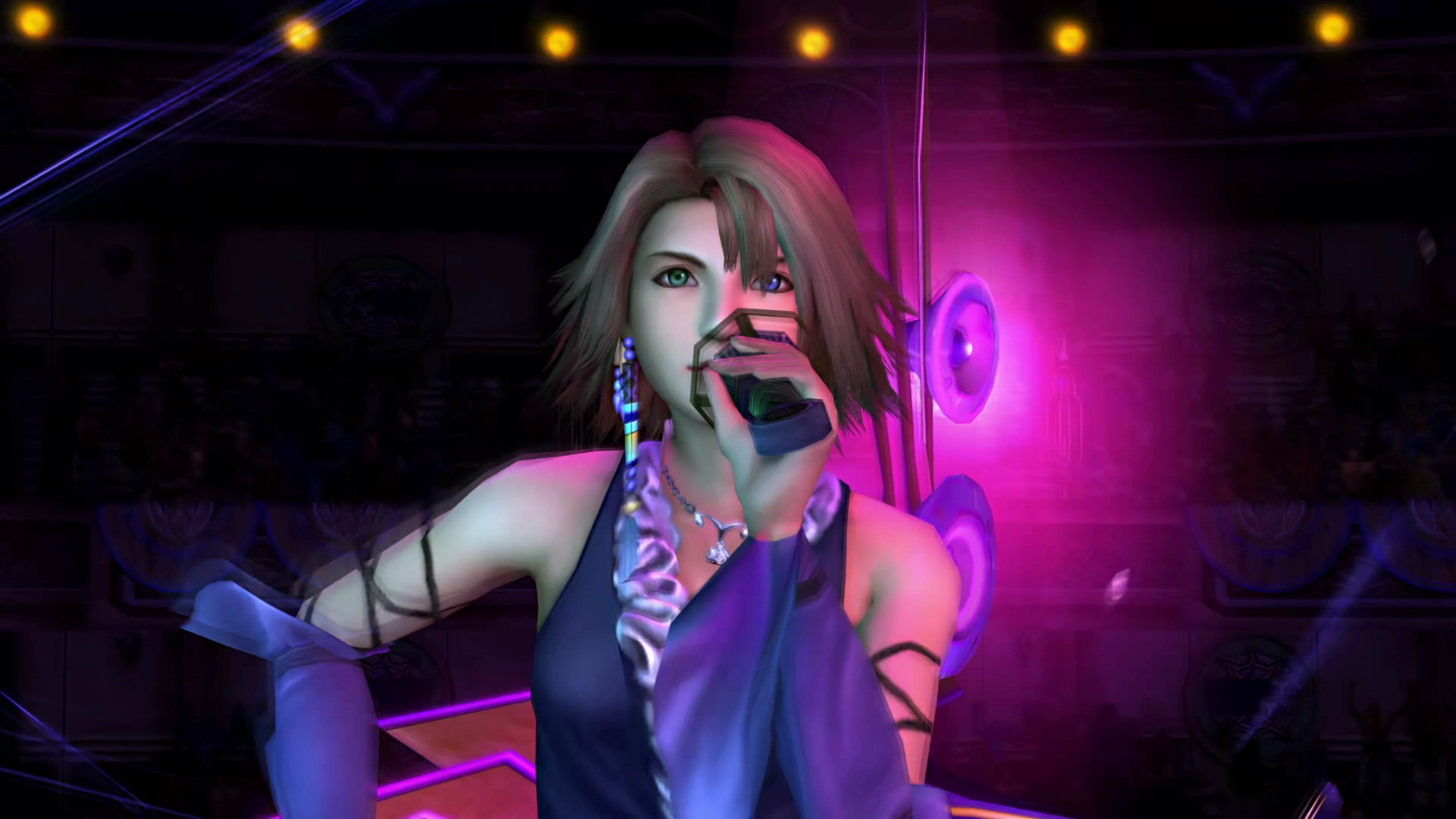
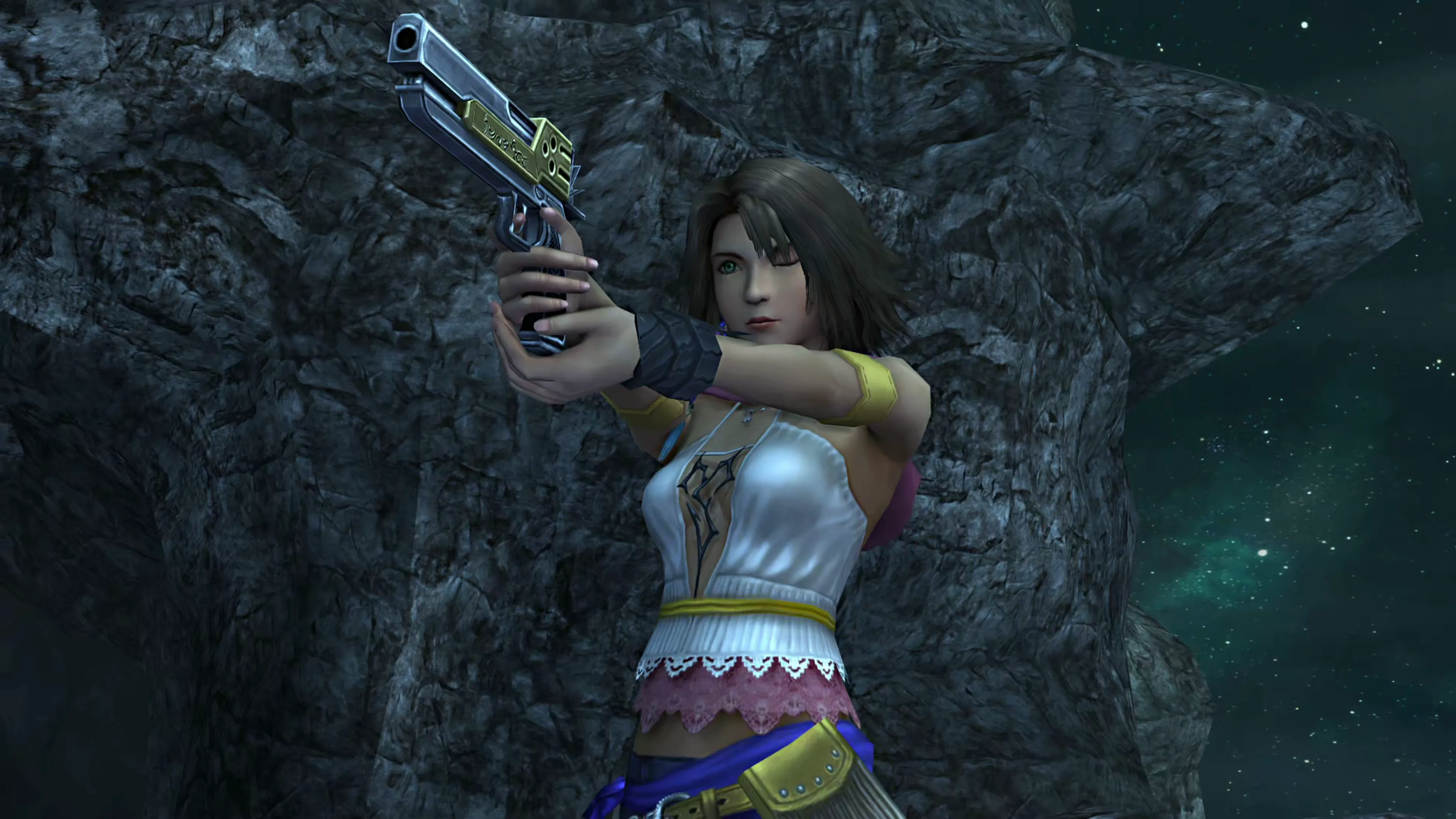
That said, the game has plenty going for it. By far, the most engaging element of Final Fantasy X-2 is its job system, a.k.a. the Dresspheres. This system allows Yuna, Rikku, and Paine to switch between various roles in the party during active combat, so instead of having characters that are typecast (for example, only Yuna being able to cast summoning and healing spells), all three party members can take on various roles as you progress through the game.
In fact, the game’s entire ATB system builds on the groundbreaking success Final Fantasy X offered. It keeps the same attack-selection and turn-based combat system, but it shifts from letting you swap party members mid-battle to letting you swap party member roles mid-battle. It’s hard to criticize these slight adjustments when Final Fantasy XII mirrored the job structure (to some degree), and Final Fantasy XIII took mid-battle role transitions even further with the Paradigm and role system. Not everyone will agree, but the Paradigm system has huge parallels that some could argue started in this game.
One area that is both a strength and a weakness of this game is its Mission and location structure, as well as its non-linear approach to Missions. The game gives you all kinds of leeway to make your own decisions about how many of the areas you would like to visit in each chapter. This is kind of neat, because each time you visit, you get to experience a progression of different story elements, but you also have a lot of visits to mundane, tedious locations, with long sequences that have no battles or action to speak of.
And with that, it’s time to talk about the 100% Story Completion Challenge. There’s nothing like the feeling of success when you complete all the story elements and earn the  Sweet Perfection Achievement/Trophy, but calling this a problematic addition would be putting it mildly. The most annoying part is that the fixes are extremely obvious.
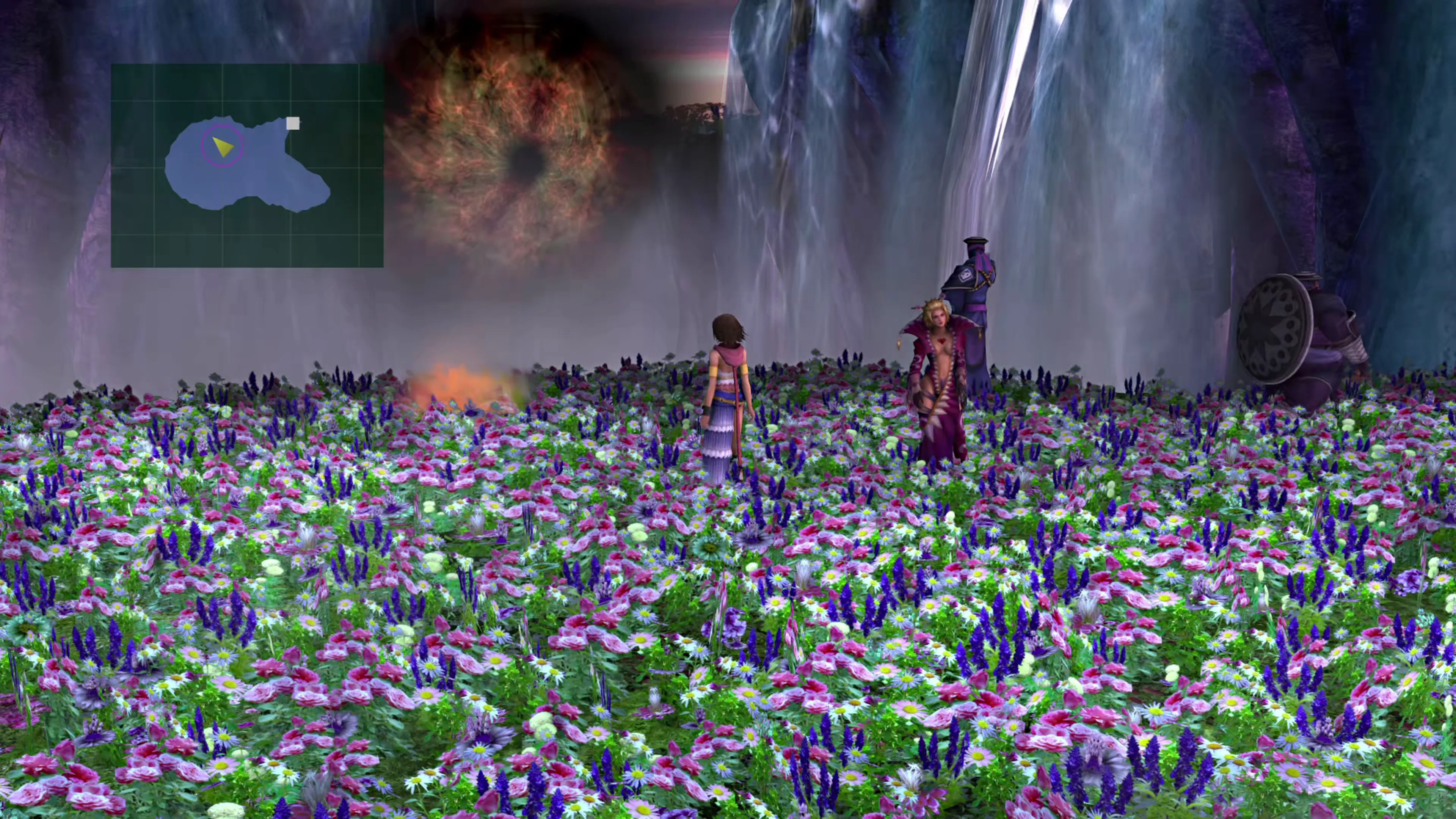
For players who are unfamiliar, Final Fantasy X-2 has a “Story Completion” percentage visible on certain screens. You can see it in your save file, and you can see it when you access the map from the bridge of the Celsius. You’ll watch it slowly climb as you progress through the game’s chapters, and then, if you’re like most players, you’ll reach the end thinking you’ve completed everything, only to get upset when you fall a few percent (or sometimes a lot) short.
Why isn’t there a way in the game to know whether you’re short any Story Completion Percent before you progress forward? Why are some of the scenes so janky and hard to trigger?
This challenge has been annoying gamers for years. The game offers very few indicators that you’re missing story elements, and many of them are difficult to unlock or trigger without knowing exactly which steps to follow beforehand. This game basically makes having a walkthrough and strategy guide a requirement if you plan to go for 100% Story Completion. This is one of the primary reasons why so much effort went into making the Story Completion Tracker for this site and the Shinra’s Bestiary Tracker as well. This is a fun game, but without a guide, you’re really hamstringing yourself.
Another annoyance is that some scenes are skippable while others aren’t. You should never be skipping scenes if you’re going for 100% Story Completion, but if you’ve played the game and just want to rip through it quickly again, the process for skipping scenes is really annoying. You press 

 , and if the scene is skippable, you press the

 button. If it’s not, you won’t be able to press to skip, and you’ve just paused the scene, slowing things down even more!
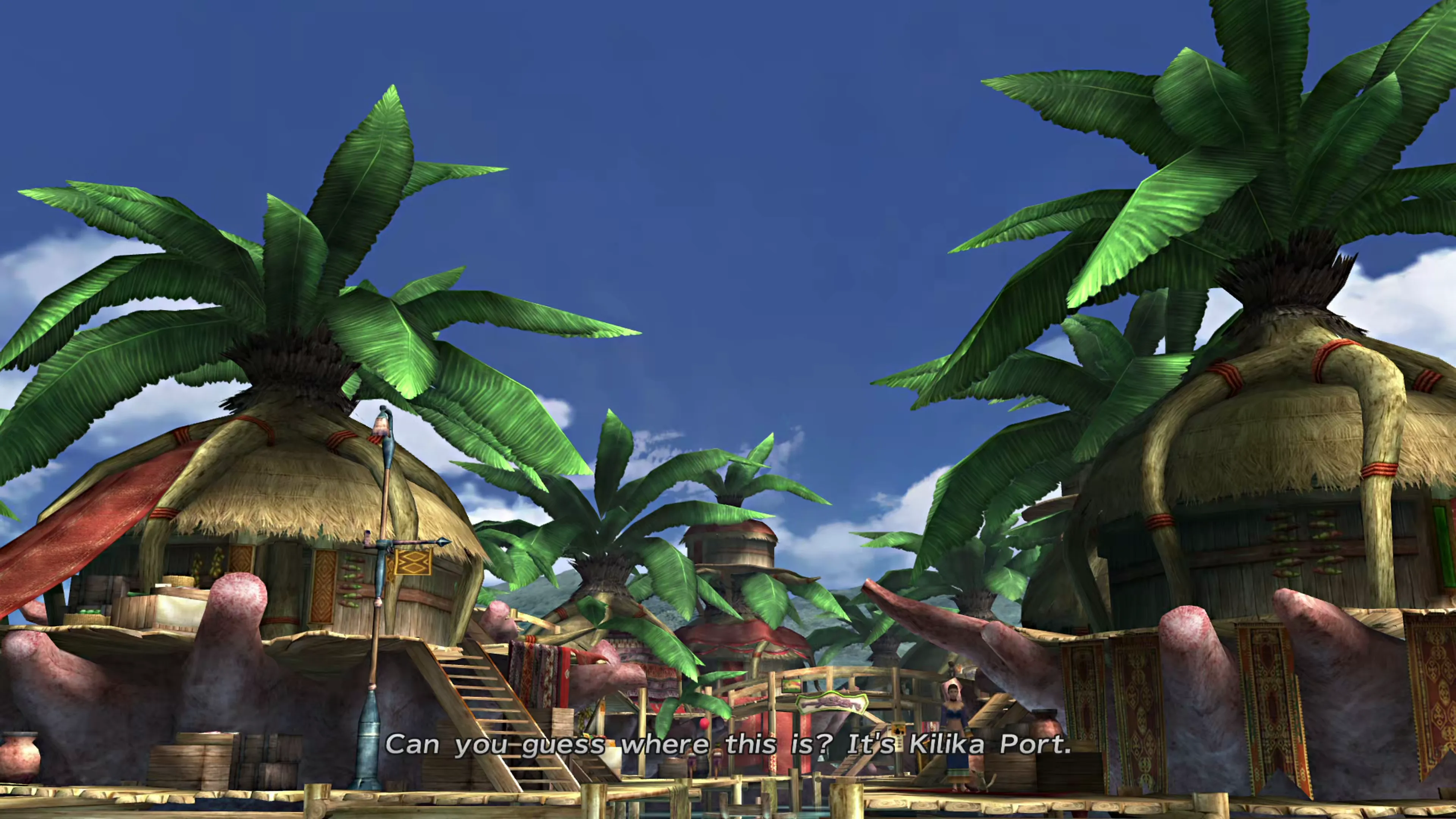
Moving on to the plot next. It’s definitely fun visiting Spira after all of the events of the previous game; after having defeated Sin, triggering the Eternal Calm, and seeing what life is like in Kilika, Mt. Gagazet, etc., outside of the pending doom of Final Fantasy X. But that being said, the story doesn’t add as much to the plot of the previous game as you might hope. Unfortunately, it gives players the mistaken impression that it WILL do this very early in the game, but it doesn’t.
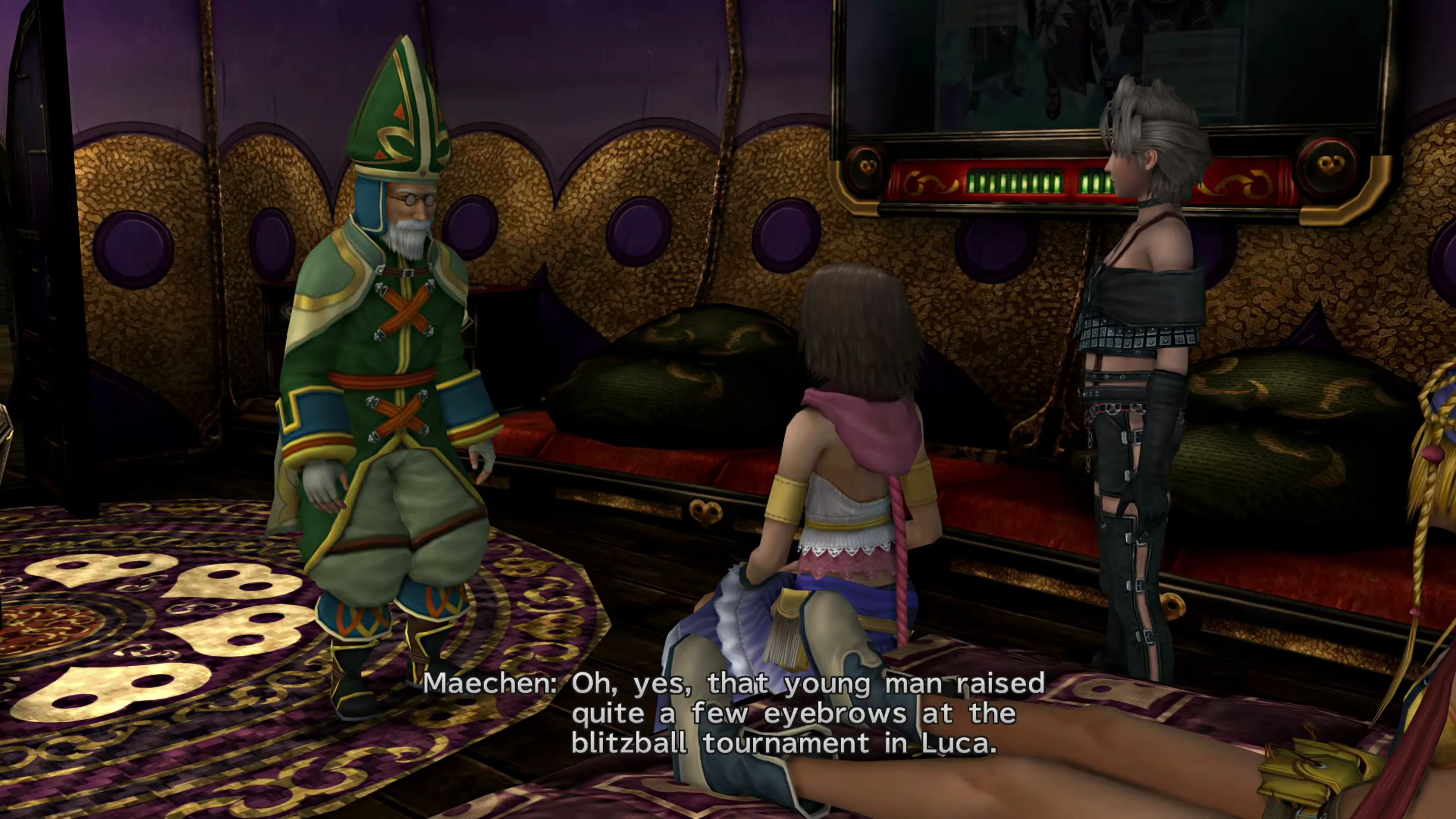
The game teases you with glimpses of a character that looks like Tidus. The characters allude to this person looking like Tidus, but without getting too much into spoiler territory, the story doesn’t tie back to the previous game with a nice, neat bow. If you’re looking for closure, you’re not going to get it when you get to the finale. The story still has a lot to offer, but it’s worth knowing what you will and won’t get before you start a playthrough.
Lastly, another detraction is that you can tell this game didn’t get as much love as Final Fantasy X. It’s a lot less polished, especially in its side-quest content, and that makes sense, because Square Enix rarely focuses on sequel titles to its mainline series. So it sort of is what it is…
That said, if you enjoyed Final Fantasy X and go into Final Fantasy X-2 with an open mind, knowing it’s a different experience with a happier, all-female cast, this game has a lot to offer. It’s definitely worth a playthrough.